Behind the Beef: A Day with Arizona's Future Dietitians
Tiffany Selchow | April 24, 2026
 On Friday, April 10, 2026, fourteen University of Arizona dietetic interns traded their classrooms for a day immersed in the beef community. These are graduate students in the final stretch of becoming registered dietitians, future professionals who will shape how their patients think about food for decades to come.
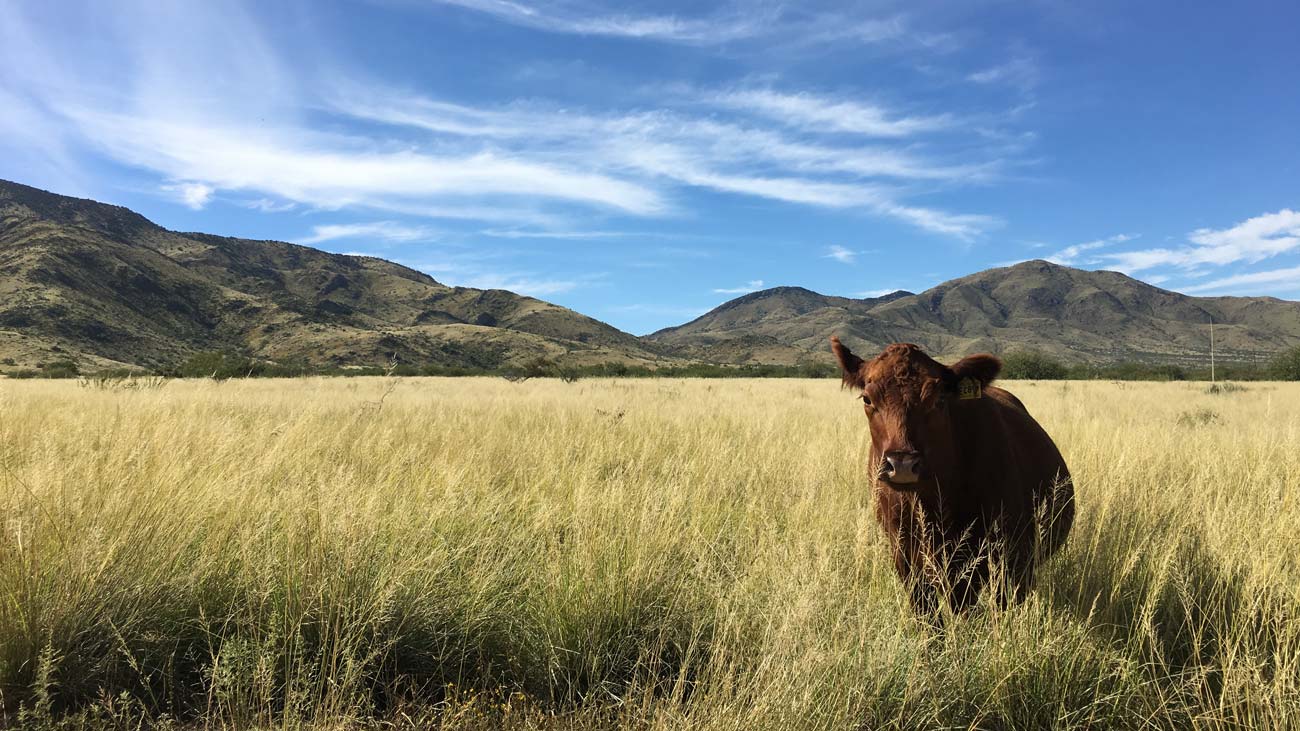
The morning started at King's Anvil Ranch, where Sarah and Joe King welcomed the group to their working cattle ranch in the Altar Valley, southwest of Tucson. The Kings have been raising cattle on this land for generations, and it shows in the way they talk about their animals. They walked the interns through the lifecycle of cattle on their ranch, how the herd rotates across pastures to keep the range healthy, and how water development projects are carefully managed so cattle and local wildlife can both thrive.
What seemed to surprise the interns most was how much space the cattle have to roam and how attentive the Kings are to the animals' wellbeing. One participant wrote afterward that the ranch "cares a significant amount about their cattle." Another was surprised to learn that low-stress animal management is not just good ethics but good ranching and that cattle who are calm and comfortable simply produce better.
From the ranch, the group drove to the University of Arizona's Food Product and Safety Lab, where Dr. Duane Wulf, Director of the Arizona Initiative for Arid Lands Animal Production and Associate Professor, led the group through the harvesting side of the beef story. Dr. Wulf walked them through USDA grading, the food safety protocols built into every step of modern beef processing, and the animal welfare standards that govern how harvesting is done. It was a side of the beef supply chain most of the interns had never seen, and it made an impression.
"It stood out to me how the farmers and butchers value ethics and avoid animal cruelty," one intern wrote. Another said they would remember "the harvest process and safety procedures."
The afternoon brought a nutrition presentation from Erin Good, a registered dietitian with the Iowa Beef Industry Council, who spoke directly to the science behind the beef. Erin walked through beef's 10 essential nutrients per serving, including zinc, iron, selenium, and B vitamins. She introduced the 10-10-10 rule: a single 3-oz serving of lean beef delivers more than 10% of the daily value for 10 essential nutrients, including protein, iron, zinc, and B vitamins, all for less than 10% of your daily calorie needs. It's a simple, memorable way for dietitians to explain beef's nutritional density to future patients. She also covered the fact that more than half of beef's fat is unsaturated, and practical ways to work lean beef into heart-healthy, weight-conscious, and budget-friendly eating patterns.
For a group that arrived with lingering questions about beef and health, the presentation did its job. "Beef can be heart healthy" was one of the most common takeaways interns said they would carry forward. "The 10-10-10 rule" and "there are 38 lean cuts" came up repeatedly. One intern summed it up plainly: "Beef isn't bad for you!"
By the end of the day, the survey data told a clear story. The group's average beef perception score jumped from 3.3 to 4.5 out of 5. Before the tour, only 29 percent of participants rated their perception of beef at a 4 or 5. Afterward, every single respondent did. The share of interns willing to recommend beef as often as or more often than other proteins climbed from 43 percent to 92 percent. Agreement that beef has an excellent total package of nutrients rose from 57 percent to 92 percent. And on trust in cattle welfare and disease management practices, more than 90 percent of respondents said they agreed or completely agreed.
When asked what they would share with others, the responses came back simple and confident. "How great beef can actually be for you." "I would like to share how ethical the practices of beef farming are for calves." "Beef is nutritious." "How beef is handled after harvesting." "All the different cuts, some are less expensive but basically the same thing."
That is exactly the point of the Gate to Plate Tour. These are not just future dietitians who now feel better about beef but communicators who spent a day watching real families raise and process food with care, and who now have the words and the confidence to say so.
The Arizona Beef Council thanks Sarah and Joe King of King's Anvil Ranch, Dr. Duane Wulf and the University of Arizona Food Product and Safety Lab team, and Erin Good, RD, of the Iowa Beef Industry Council for making this experience possible. Special thanks to the Iowa Beef Industry Council for their continued funding of the Gate to Plate Tour series in Arizona and across high-population states.
###
About the Arizona Beef Council
The Arizona Beef Council is a non-profit organization served by a nine-member board of directors representing cattle growers, cattle feeders, and dairy farmers, and are appointed by the Governor of Arizona. These volunteers oversee the Beef Checkoff and Checkoff-funded programs.
About the Iowa Beef Industry Council
The Iowa Beef Industry Council is funded by the $1-per-head national Beef Checkoff Program and the $0.50-per-head Iowa State Beef Checkoff. Checkoff dollars are invested in beef promotion, consumer information, research, industry information and foreign market development, all with the purpose of strengthening beef demand. For more information, visit iabeef.org.
About the Beef Checkoff Program
The Beef Checkoff Program was established as part of the 1985 Farm Bill. The checkoff assesses $1 per head on the sale of live domestic and imported cattle, in addition to a comparable assessment on imported beef and beef products. States may retain up to 50 cents on the dollar and forward the other 50 cents per head to the Cattlemen’s Beef Promotion and Research Board, which administers the national checkoff program, subject to USDA Approval. For more information, visit BeefBoard.org.